Your Medaka Just Arrived
First: do not rush, and do not panic. Your fish just spent a long ride in a dark box, sometimes a day, sometimes longer, and they are stressed, pale, and tired, which is normal and temporary. The next hour is the one part of shipping you control, and it is simple to get right. Here is exactly what to do, in order.
Before you open anything
Open the shipping box indoors, out of direct sun, and check the bag with the fish still sealed inside. If something has gone wrong in transit, photograph the unopened bag right away and contact me the same day. That is all my live arrival guarantee asks of you, and it lets me make it right without any back and forth.
Assuming everyone is swimming, and they almost always are, take a breath. The water in that bag looks dirty and the fish look washed out. Both are normal after two days in transit. Colour comes back over the first week.
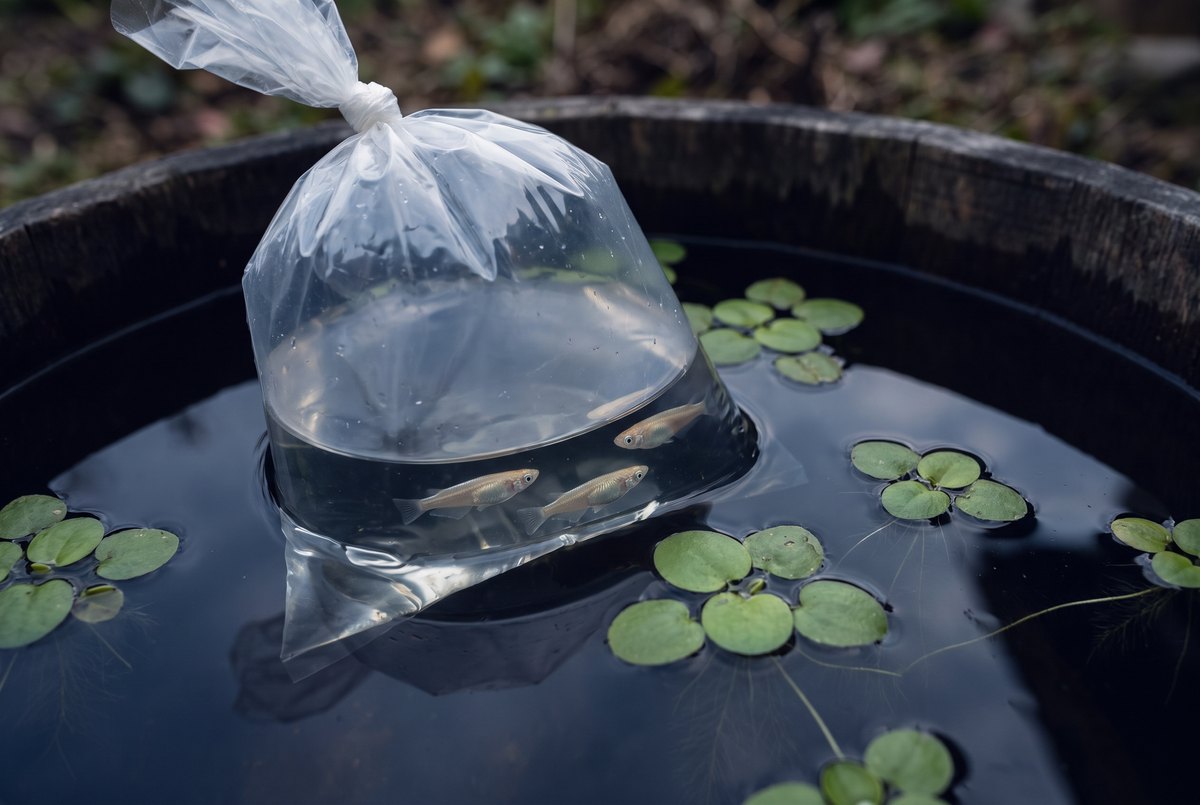
Step 1: float the bag, 15 to 20 minutes
Set the sealed bag on the surface of the water it is moving into and leave it alone for 15 to 20 minutes. This does one job: it matches the bag's temperature to the tub's, slowly. Temperature shock is the most common acclimation mistake, and floating is the entire cure. If your container is outdoors in strong sun, shade the bag with a towel while it floats, since a dark bag in sunlight heats fast.
Step 2: mix the water, gradually
Open the bag, roll the top down to make a collar so it floats open, and add roughly half a cup of your water to the bag. Wait five minutes. Do it twice more, five minutes apart. This lets the fish adjust to your water's chemistry at a walking pace rather than all at once.
Medaka are hardy and forgiving fish, which is exactly why this gentle version of acclimation is enough. You do not need drip lines or airline tubing for medaka. Slow and simple does it.
Step 3: net them out, leave the water
Lift each fish out with a soft net, or gently pour the bag through the net over a bucket, and release the fish into their new home. Welcome home! The shipping water goes down the drain, not into your tub. Two-day-old bag water is the one part of the package you do not want to keep.
If there are snails in your box
Snails travel differently than the fish: they ship nestled in a damp paper towel rather than a bag of water, since they are happiest moist but not submerged in transit. That means there is no bag to float. Unwrap them gently and lower them right side up to the bottom of their new tank, tub, or pond. They will likely stay sealed behind the trapdoor for a few hours while they settle, sometimes as long as a day, and that is completely normal. They open up and get to work when they are ready. If your water is much colder or warmer than the room they arrived in, rest them in a cup of tank water for ten minutes first, though with trapdoors it is rarely necessary. They are the tough ones in the box.
The first 48 hours: what is normal
Hiding is normal. New fish bolt for cover and stay there, sometimes for a day or two. Plant cover actually shortens this, because a fish that feels hidden calms down faster.
Pale colour is normal. Stress mutes their colour. It returns as they settle.
Not eating is normal, and do not feed them on day one. Their systems are slowed from transit and uneaten food only fouls the water. Offer a small pinch on day two, and take it as a good sign when they rise for it.
Jumping risk is at its lifetime peak. The first nights in a new container are when medaka are most likely to jump. Keep a few inches between the waterline and the rim, and read my guide on jumping if your setup is tight.
Where they should be going
The ideal receiving container has been set up and running for a while: settled water, some plant cover, and no other new arrivals that same week. If you are still cycling a brand-new setup, my care guide covers what ready looks like. And if your fish have not arrived yet, this is the moment to get the container ahead of them, since there is a box at checkout to delay your shipment until your setup is ready.
Outdoor-raised medaka ship Mondays with free floating plants and my live arrival guarantee, plus a free baby Japanese Trapdoor Snail while supplies last. There is a box at checkout to delay shipment until your setup is ready.
Shop Medaka VarietiesCommon questions
How do I acclimate medaka after shipping?
Float the sealed bag on the destination water for 15 to 20 minutes to equalise temperature, then open the bag and add a small amount of your water three times, five minutes apart. Net the fish out and release them, and discard the shipping water rather than pouring it in. Medaka are hardy, so this gentle method is all they need.
Should I feed medaka on the day they arrive?
No. Their systems are slowed from transit and uneaten food only fouls the water. Offer a small pinch on the second day. Rising to meet food is one of the clearest signs a shipped fish has settled in.
My new medaka are hiding and look pale. Is something wrong?
That is normal after shipping. Stress mutes their colour and new fish keep to cover, sometimes for a day or two. Colour returns over the first week, and plant cover actually speeds settling because a fish that feels hidden calms down faster.
Should I pour the shipping bag water into my tank?
No. Water that has held fish for two days of transit carries waste you do not want in your container. Net the fish out, release them, and discard the bag water.
How do I acclimate the snails in my order?
Snails ship in a damp paper towel, not a bag of water, so there is nothing to float. Unwrap them gently and lower them right side up to the bottom. Staying sealed for a few hours, sometimes a day, is normal while they settle.
What if a fish arrives dead?
Photograph the unopened bag the day the box arrives and contact me the same day. Every live order is covered by my live arrival guarantee, and I will make it right.