The Firefly Standard
Every fish that leaves here passes through one pair of hands: mine. That is the luxury of a seventeen-pot operation, and it means I can hold every animal to a standard a warehouse never could. This page is that standard, written down.
What it takes to ship
A fish earns the box by being healthy, active, feeding, and free of visible problems, full stop. Anything that looks off stays home, whether that is clamped fins, a scrape from a spawning chase, or simply behavior I do not like the look of. Because the operation is small, this is not a sample check. It is every fish, individually, and I would rather short an order and email you than ship an animal I have doubts about.
The last look, at packing time
Every fish gets inspected twice: once when I select it for your order, and again in the moments before it goes into the bag. That second look exists because I would rather catch a problem on my deck than have you find one in the box. It is also when sexed orders get their sexing confirmed, the water gets its final check, and the free floating plants are picked for your state's shipping rules.
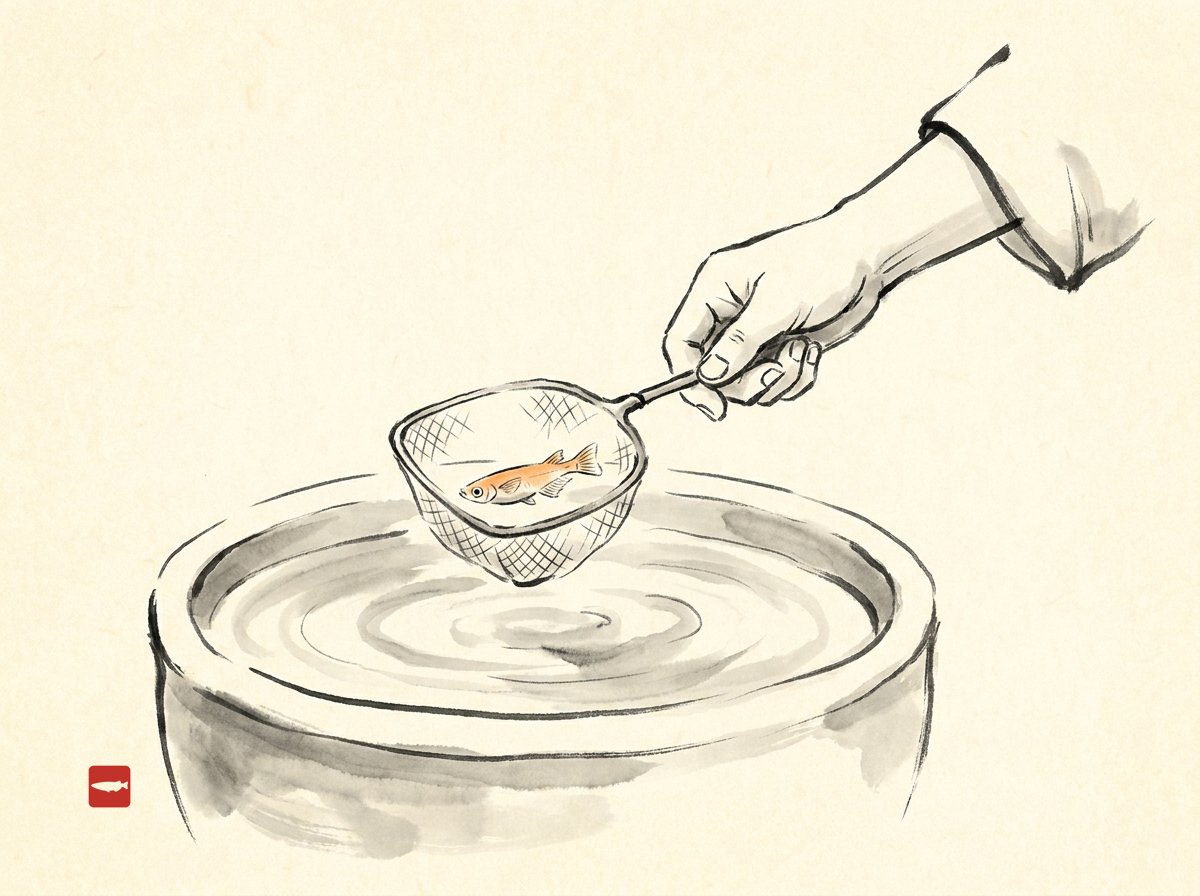
Every fish gets a last look before the bag. My illustration.
Sexed by hand, one fish at a time
When you order a female, a breeding pair, or a trio, somebody stood over a net and read fins, dorsal shape and notch, anal fin profile, exactly as my sexing guide teaches, because the guide describes what I actually do. A pair is a pair and a trio is two females and a male, not a scoop and a hope. Sexing small fish takes minutes per fish, and it is minutes I consider part of the product.
One line, one container
Named lines stay true here because they never meet: one variety per container, always. Each generation, the best-colored fish become the next season's breeders, which is how a Blue Miyuki's shine and an Orochi's depth hold steady year over year. My breeding-for-color guide explains the method, because there is no secret to protect, just work to do.
What I will not breed
I do not breed or sell Daruma-type medaka, and I do not think anyone should. The shortened, rounded body that makes them collectible gives them lifelong swimming trouble, and a fish that struggles to swim should not be bred to on purpose. It costs me a popular product to hold that line, and I hold it anyway. The reasoning is laid out in my body types guide.
No cull bucket
Selective breeding produces beautiful fish that miss their line's narrow target: shine a little short, a patch out of place, a color between two names. The industry word for those fish is culls. My take is that all of my fish have value, no matter the color, so mine are raised to the same standard as everything else and offered as the Breeder's Choice Collection, labeled as exactly what they are. True line fish can land in the mix as well, when the pots have extras, though no specific line is ever promised. A fish that missed a label deserves better than a bucket.
Real fish, real photos, real weather
The fish in my listings are my own animals, raised outdoors in North Carolina through real seasons and photographed here. Where a guide uses an illustration or a representative species photo, it is labeled as one. And every live shipment is backed by the live arrival guarantee, reviewed personally, not by a script.
That is the whole standard
No fine print behind it. If you want to see what it produces, the pots are full and the guide library is free either way.
Meet the Fish