Medaka Care: The Complete Guide
Japanese medaka (Oryzias latipes) have been kept in Japan for over 300 years, and there's a reason the hobby never faded: they're hardy, peaceful, easy to breed, and happy in setups as simple as a bowl of pond water on a patio. This is everything I tell first-time keepers.
Medaka at a glance
| Adult size | 1.2–1.6 inches (3–4 cm) |
|---|---|
| Lifespan | About 2 years, and 3 or more with good care |
| Temperature | Survive roughly 40–85°F when changes are gradual; do best from the low 60s to the high 70s |
| pH | 6.5–8.5 (adaptable; stability matters more than the number) |
| Minimum space | 10 gallons for a small group, but bigger is always better; more water is more stable |
| Temperament | Peaceful, active, top-water schooling fish |
| Diet | Omnivore, micro pellets, crushed flake, live foods, and mosquito larvae |
| Difficulty | Beginner-friendly, among the hardiest fish in the hobby |
Why medaka are different
Most aquarium fish sold in the US are tropical: they need a heater and a sealed indoor world. Medaka are temperate. In their native range they live in rice paddies, ditches, and slow streams that freeze in winter and bake in summer. That history is why a well-acclimated medaka shrugs off conditions that would stress most community fish, and why they're one of the few fish that can live outdoors year-round, given a container with enough water volume and depth for your climate.
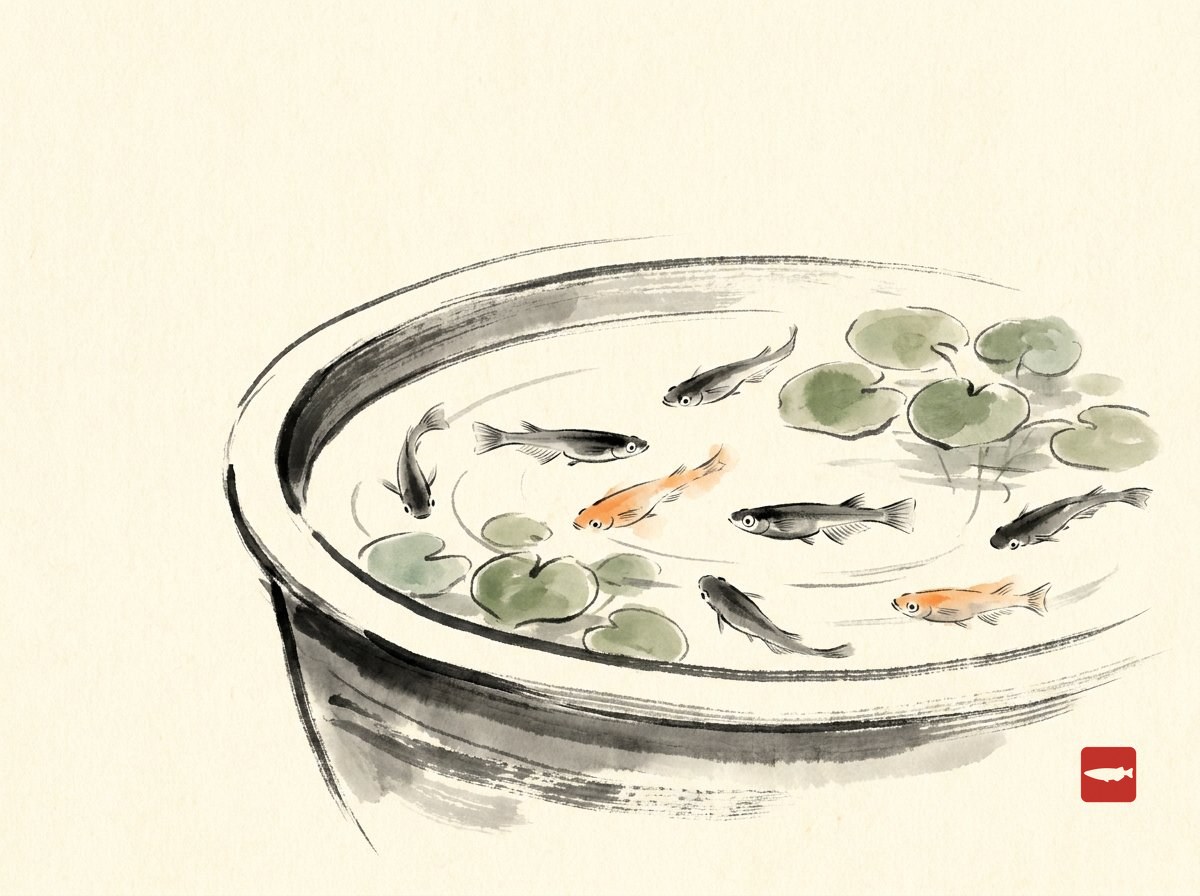
The whole method in one picture: a pot, some plants, and the fish. My illustration.
I protect that hardiness by keeping my medaka in planted, lightly stocked setups and checking every fish by hand before it ships.
Housing: tanks, tubs, and ponds
Medaka aren't fussy about the container. What they want is surface area, they live in the top few inches of water, and stable, cycled water.
- Aquariums: a standard 10-gallon comfortably houses 5 or 6 adults. No heater needed indoors. Gentle filtration (a sponge filter is ideal), medaka dislike strong current.
- Patio tubs: a 15–20 gallon tub with floating plants is the classic Japanese way to keep them, and where colors like the shimmer on a Blue Miyuki look their best, viewed from above, in sunlight.
- Ponds: any small pond works. Provide shallow planted edges and skip large predatory tankmates.
Water
Medaka tolerate a wide range but transition poorly to sudden change. The rules are simple:
- Cycle first. Like any fish, medaka need an established nitrogen cycle. Ammonia and nitrite should read zero before fish go in.
- Dechlorinate tap water with any standard water conditioner.
- Change water gently. 20–30% weekly indoors; outdoor tubs with live plants often need less. Match temperature when refilling.
- Don't chase numbers. A steady pH of 8.0 beats a pH yo-yoing around 7.2.
Feeding
Medaka have small, upturned mouths built for eating from the surface. A quality micro pellet or crushed flake, fed once or twice daily in amounts they clear in about two minutes, covers their needs. To condition breeders or deepen color, add live or frozen foods a few times a week, daphnia, baby brine shrimp, mosquito larvae (outdoor tubs produce these for free), or microworms.
Tankmates
Keep medaka with animals that can't eat them and won't outcompete them:
- Snails are the ideal companions. Japanese Trapdoor Snails and Blueberry Snails clean up leftover food and algae without touching eggs or fry, they're what I keep alongside my own breeding colonies.
- Shrimp (cherry shrimp) coexist fine, though medaka will pick off shrimplets.
- Other medaka. They're peaceful schoolers; different color lines mix without conflict (they will interbreed, see the breeding guide if you want to keep lines pure).
- Avoid: goldfish and koi (they eat medaka), aggressive barbs, and anything large enough to see a 1.5-inch fish as food.
The first 48 hours: acclimating shipped fish
Shipping is the most stressful event in a medaka's life, and the first two days decide how smoothly it recovers. When your box arrives:
- Open it promptly and inspect the bags. (My orders are covered by a live arrival guarantee, if anything's wrong, photograph it right away and contact me by the end of the delivery day.)
- Float the sealed bag in the destination water for 15–20 minutes to equalize temperature.
- Cup-acclimate: open the bag and add a splash of your water to it a couple of times, about five minutes apart. Then lift the fish out with a soft net and release them, and discard the bag water rather than pouring it into your tub. My acclimation guide has every step.
- Keep them dim and unfed. Leave the lights off if they're indoors, or give the tub some shade outdoors, and skip food for the first 24 hours.
- Add the free plants. The floating plants included with every fish or snail order do double duty: the cover calms the fish, and the plants start taking up ammonia as soon as they are in the tub.
Common beginner mistakes
- Uncycled water. The #1 killer of new fish of any species.
- Overfeeding. Medaka have tiny stomachs, and whatever they don't eat rots straight into ammonia, which is exactly what fouls a small tub. Feed only what they finish in a minute or two, once or twice a day. A slightly hungry medaka is far safer than a dirty container.
- Strong filtration. Medaka come from nearly still water; a churning power filter exhausts them. Baffle it or use a sponge filter. I run sponge filters in my setups and the fish clearly like them: many of mine hang around the bubble column and play in the stream rather than avoiding it.
Healthy, well-conditioned fish handle new homes better. Browse this season's varieties, every order with live fish or snails includes free floating plants and my live arrival guarantee.
Shop Fish Varieties