Is My Medaka Sick?
Start with the water, not the fish. The single most useful thing to know about sick medaka is that most of what looks like disease is really a water problem wearing a costume. So the first step is never a medicine bottle. Here is the order of operations I would follow, and what the common symptoms usually mean.
Step one, every time: check the water
Before anything else, do two things. Test the water if you have a kit, looking mainly at ammonia and nitrite, where the only good number is zero. And change a third of the water with dechlorinated water at a similar temperature, whether or not the test looks fine. A partial change is nearly free, cannot hurt, and quietly fixes a remarkable share of sick fish on its own.
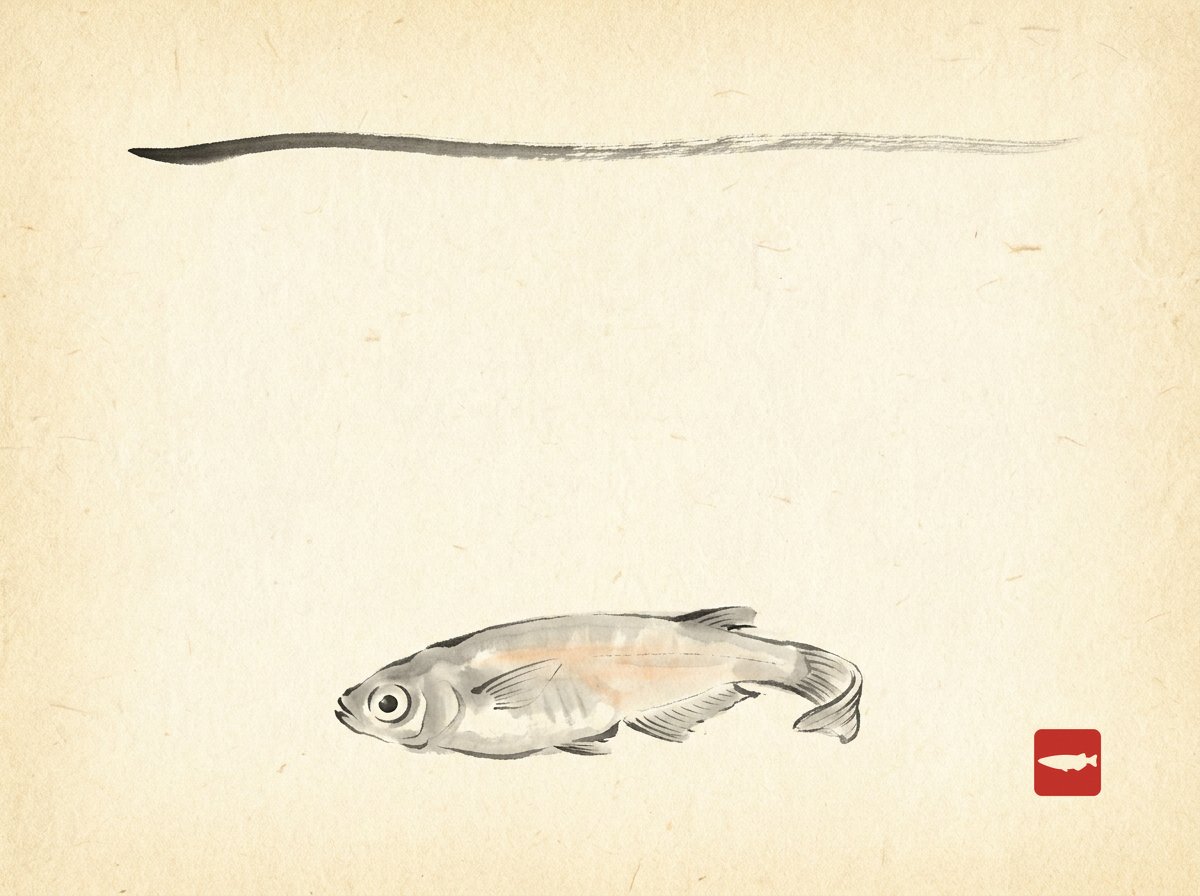
Clamped fins and a low hover: the posture that says check the water first. My illustration.
Also ask what changed lately. New fish added? Heavy rain in an outdoor pot? A heat wave? A jump in feeding? The answer is usually standing right there.
One sick fish or the whole container?
This question sorts most situations. Every fish acting off at once, gasping, clamped, or sluggish together, points at water or environment, and the water change above is the treatment. One fish acting off while the rest are fine points at that fish, and the kindest first move is a separate container of clean, dechlorinated water where you can watch it closely and treat it without dosing everyone.
White spots like grains of salt
Tiny white dots dusted over the body and fins, often with the fish flashing, which means scratching itself against surfaces, is the classic sign of ich, a parasite. It is treatable and catching it early matters, because it spreads. Raise the temperature gently if the fish are indoors, which speeds the parasite through the stage where treatment can reach it, and treat with an ich medication, following the label exactly. Check that the label is safe for snails and live plants before you dose a container that has them, because many ich medications contain copper, formalin, or malachite green, which harm snails. Treat the whole container, since by the time you see spots on one fish the parasite is in the water.
Cotton-like fuzz
A white or grey fuzzy patch, usually on a spot that was injured first, is most often fungus. It takes hold on damaged or stressed fish far more than healthy ones. One lookalike matters: a flat, pale, slimy patch around the mouth or a pale band across the back is usually columnaris, a fast-moving bacterial infection that a fungus remedy will not touch, so if the patch is smooth rather than fluffy, or the fish is declining quickly, treat it as bacterial with a medication labeled for columnaris. Either way, move the fish to a clean separate container and treat per the label. Then ask what caused the original injury, because fungus is usually the second problem, not the first.
Ragged, shrinking fins
Fins that look torn, ragged, or progressively shorter, sometimes with a pale edge, point at fin rot, a bacterial problem that almost always begins with poor water or constant stress. Clean water is both the prevention and most of the cure: with the water fixed, mild cases regrow on their own. Severe cases need a bacterial medication, again per the label.
The hard ones
Dropsy, a body swollen so the scales stand out like a pinecone, is a sign of fluid building up from organ failure, often with a bacterial infection behind it, and by the time it is visible it is very rarely reversible. Isolate the fish to keep the container calm. I will not pretend a cure is likely, and sometimes the kindest ending is a humane one.
Floating or sinking trouble, a fish swimming tilted or struggling to hold depth, is usually a swim bladder issue. In medaka it is most often digestive: stop feeding for two or three days and it frequently rights itself. In Daruma-bodied fish it is chronic, which is why I do not sell them.
Keeping it from happening again
The boring answers are the real ones. Do not overfeed, since uneaten food is the root of most bad water. Do not overstock, and my stocking guide has real numbers. Keep live plants doing quiet filtration work. And quarantine anything new, fish or plant from any source including mine, in its own container for at least two weeks, and four is better, before it joins the main pot. That patience has stopped more outbreaks than every medicine on the shelf.
Outdoor-raised through real seasons, my medaka arrive tough, and every live order ships with free floating plants that quietly help keep water healthy.
Shop Medaka VarietiesCommon questions
Why is my medaka suddenly acting sick?
Check the water before assuming disease. Most apparent illness in medaka traces back to water quality: ammonia, nitrite, overfeeding, or a sudden change. Test if you can, and do a one-third water change with dechlorinated water at a similar temperature either way. If every fish is off at once it is almost certainly the water; if only one fish is off, isolate and observe it.
What are the white spots on my medaka?
White dots like grains of salt across the body and fins, often with the fish scratching against surfaces, is the classic sign of ich, a treatable parasite. Treat the whole container with an ich medication per the label, since it spreads through the water, and catch it early.
Why are my medaka's fins ragged?
Progressively ragged or shrinking fins point at fin rot, a bacterial problem that nearly always starts with poor water quality or chronic stress. Fix the water first; mild cases heal on their own once conditions improve, and severe cases need a bacterial medication used per its label.
My medaka is swollen with scales sticking out. Can it be saved?
Scales standing out like a pinecone is dropsy, a sign of fluid building up from organ failure, often with a bacterial infection behind it. By the time it is visible it is very rarely reversible. Isolate the fish, and be aware that a humane ending is sometimes the kindest option.
Why won't my medaka eat?
Run through the usual suspects in order. Cold water is the most common and most harmless: below about 50°F medaka usually slow down and eat very little, and forcing food then does harm. Next is stress, since fish new to a container often refuse food for a few days while they settle. Then water quality, so test for ammonia and nitrite before assuming illness. A single fish refusing food while the rest eat, especially with clamped fins or hiding, is the one worth watching as a possible sickness.
Should I quarantine new fish?
Yes. Keep any new fish, from any source, in a separate container for at least two weeks, and four is safer, before adding them to an established one. It is the single most effective disease prevention there is.