What Do Medaka Eat?
Medaka are omnivores with upturned mouths built for feeding at the surface, which makes them easy to feed and easy to overfeed. A good quality floating food once or twice a day covers everything they need, and everything else on this page is about doing it well.
The everyday food
A quality small floating pellet or flake made for tropical or pond fish is the backbone of a medaka diet. Their mouths point upward, so they take food from the surface readily and largely ignore anything that sinks past them. That is worth knowing, because food that reaches the bottom is usually food that gets wasted and fouls the water.
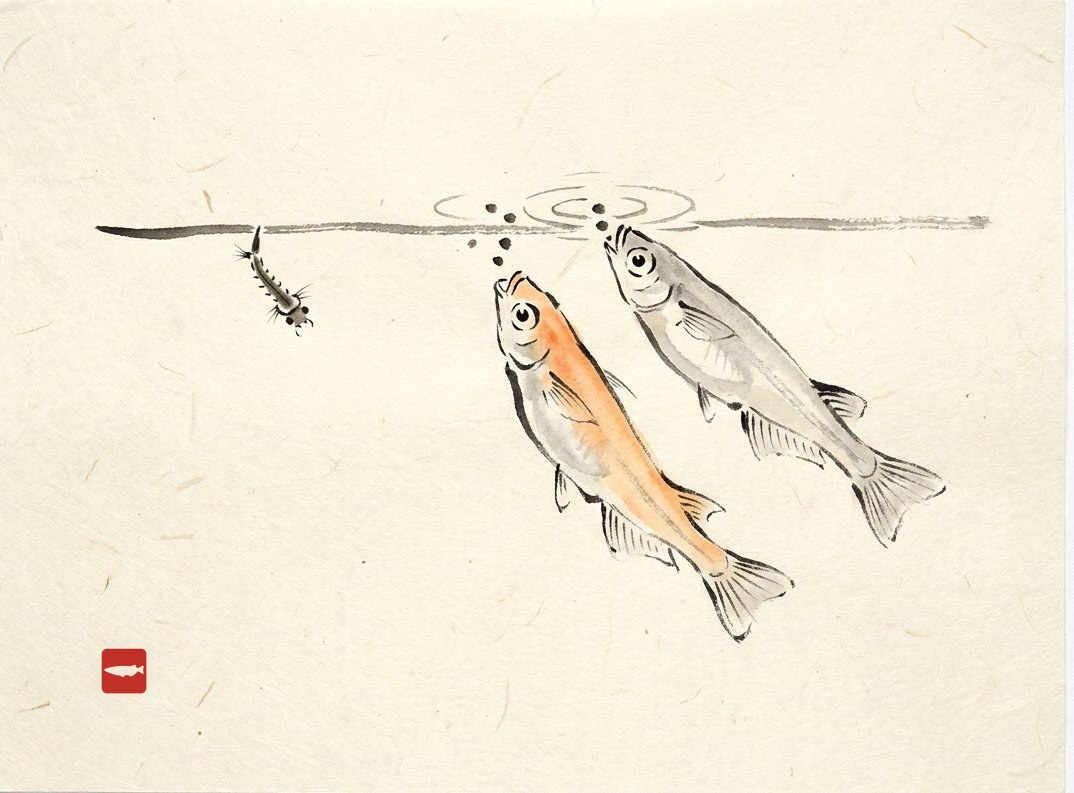
Dinner happens at the surface, and the mosquito larva knows it. My illustration.
Match the size to the fish. Adults handle a small pellet comfortably, but medaka have genuinely tiny mouths, so if a pellet looks big to you, it is too big for them. Crushing it between your fingers solves it.
How often, and how much
Feed once or twice a day, only what they finish in a couple of minutes. That is a much smaller amount than most people expect, and it is genuinely the most common mistake. Uneaten food breaks down into ammonia, which is the thing that actually kills fish in small containers.
Medaka are small and they do not need a large meal. A pinch that vanishes in under two minutes is correct. If food is drifting on the surface after five minutes, you fed too much, and the fix is to scoop it out and give less next time.
Skipping a day does no harm at all. Adult medaka handle a missed feeding easily, and a fasting day now and then is closer to how they live in the wild than a rigid schedule is.
Live and frozen food, and why it matters
Medaka color up and condition on live food in a way that dry food alone does not quite match. Mosquito larvae are the standout, and if you keep an outdoor tub you have a free, self-renewing supply of exactly the food these fish evolved to eat. Daphnia and baby brine shrimp are the other two worth knowing.
This is the genuinely useful overlap with keeping medaka outdoors: a container of still water grows mosquito larvae on its own, and medaka keep them down very effectively. You get better colored, better conditioned fish and no mosquitoes, from the same tub. My mosquito control guide covers that side of it.
Feeding fry
Newly hatched medaka cannot eat adult food, which is the single biggest cause of fry losses. They need something genuinely tiny: a powdered fry food or infusoria at first, then freshly hatched baby brine shrimp once they can swallow it, usually somewhere between day four and day ten. Feed small amounts several times a day if you can, since fry have almost no reserves and grow fast.
A well planted container helps more than any product here, because fry graze constantly on the biofilm and microscopic life growing on plant surfaces between feedings. My breeding guide goes further into raising them.
What changes with the seasons
If your medaka live outdoors, their appetite tracks the temperature. Through the warm months they eat enthusiastically and you may feed twice daily. As the water cools they slow down and want noticeably less, and in genuine cold they eat very little or nothing and rest near the bottom.
Do not keep feeding fish that are not eating. In cold water food sits uneaten and fouls a container the fish cannot easily escape. Follow their lead: if the food is not gone in a few minutes, stop offering it until the water warms again.
Mine grow up outdoors eating a quality pellet plus whatever the pots produce naturally, mosquito larvae included. That is a large part of why they arrive well colored and in condition.
Shop Medaka VarietiesCommon questions
What do medaka eat?
Medaka are omnivores that feed at the surface. A quality small floating pellet or flake is the daily staple, supplemented with live or frozen foods such as mosquito larvae, daphnia, and baby brine shrimp, which improve color and breeding condition.
How often should I feed medaka?
Once or twice a day, offering only what they finish within a couple of minutes. Overfeeding is the most common mistake and uneaten food breaks down into ammonia. Skipping a day occasionally does no harm to healthy adults.
What do baby medaka eat?
Fry need food far smaller than adult pellets: powdered fry food or infusoria at first, then freshly hatched baby brine shrimp once they can swallow it, usually between day four and day ten, fed in small amounts several times a day. A planted container also gives fry biofilm to graze on between feedings.
Do I feed medaka in winter?
Much less, and in real cold often very little or nothing. As water cools they slow down and eat less and less, resting near the bottom. Feeding fish that are not eating just fouls the water, so follow their appetite rather than a schedule.