Medaka vs. Mosquitofish
Both fish eat mosquito larvae, and eat them well. The real differences are everything else: temperament, looks, breeding, and what happens if they escape. Here is the comparison people actually need, because the answer depends on what you are stocking.
Meet the two fish
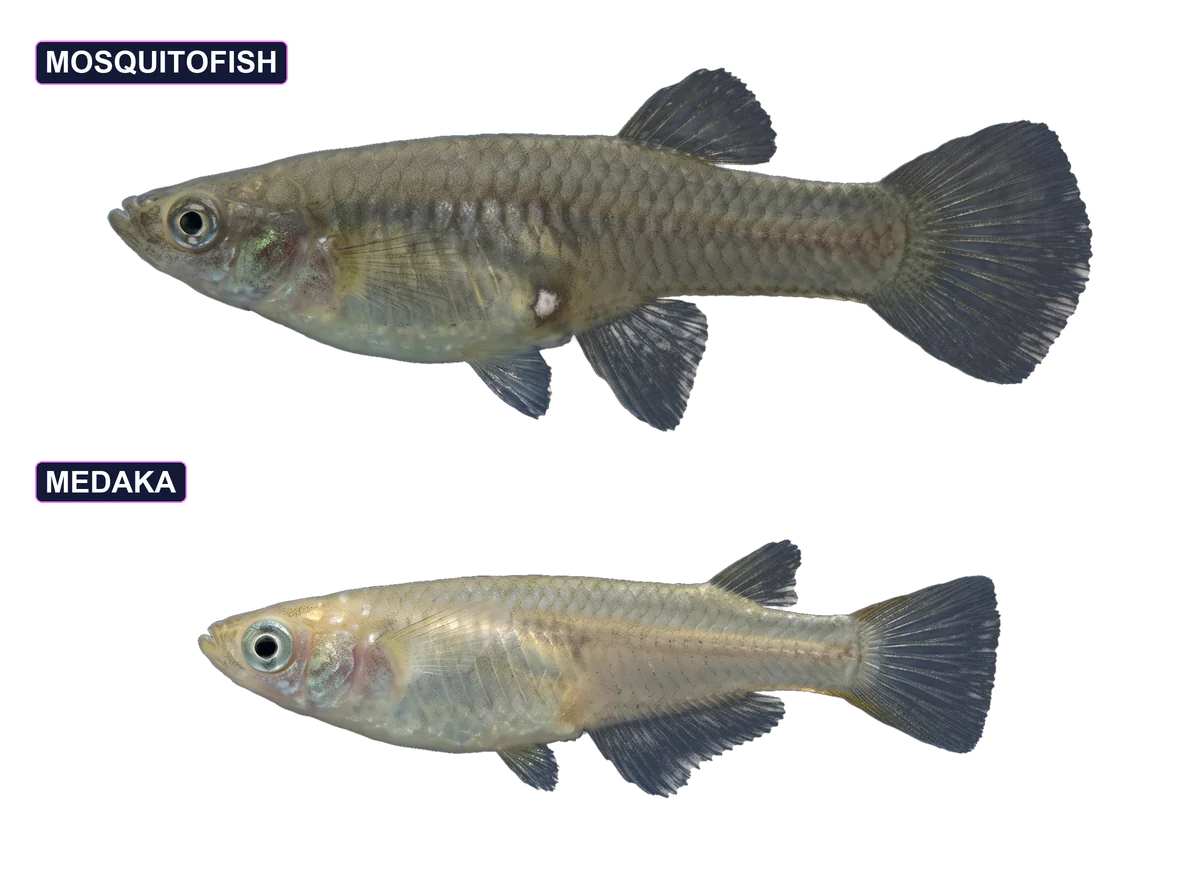
The western mosquitofish (Gambusia affinis, and its eastern sibling) is a small grey livebearer that mosquito abatement districts have stocked into ditches and ponds for a century, sometimes handing them out free. The medaka (Oryzias latipes) is the Japanese rice fish, a surface feeder from the same kind of still, shallow water, bred for centuries into colours mosquitofish never dreamed of.
At the job itself, a stocked container of either will usually keep mosquito larvae from reaching adulthood. My mosquito control guide covers how that works. The choice comes down to everything besides the job.
Temperament: the real separator
Mosquitofish earned a reputation among keepers for a reason: they are persistent fin nippers that harass slower tankmates, and in mixed containers they are usually the problem resident. Medaka are the opposite, peaceful to the point that the roughest thing in a medaka pot is a spawning chase. If the container is shared with anything else you care about, shrimp, snails, or other fish, that alone decides it.
Looks and the actual keeping
Mosquitofish are grey. Effective, but grey. Medaka give you an entire palette, from glowing Miyuki blue to deep Orochi black, visible from above in an outdoor pot, which is how a patio container is actually viewed. Both are similarly cold-tolerant and easy, so you give up no hardiness for the colour.
Breeding differs in kind: mosquitofish are livebearers that multiply relentlessly on their own schedule, while medaka lay eggs you can collect, hatch, and raise deliberately, or simply let nature take its share. One is a population that happens to you; the other is a hobby you opt into.
The escape question
Worth saying clearly: mosquitofish introduced outside their native range have a documented record of outcompeting and harassing native fish, which is why several regions now restrict them. No fish, medaka included, should ever be released or allowed to wash into a natural waterway. Keep either one in contained water, with freeboard so storms do not carry fish over the rim, and never stock a fish into water you do not own.
So which one?
If a mosquito district is stocking a retention ditch, that is what mosquitofish are for. For a container you own and look at every day, a patio tub, a barrel, a small pond, the case for mosquitofish over medaka is hard to make: same larvae control, same easy care, in a fish that is peaceful, beautiful from above, and genuinely fun to breed. I breed medaka for a living, so weigh my conclusion accordingly, but this is also exactly why I ended up breeding medaka.
The same larvae control in a fish worth looking at. Outdoor-raised, peaceful, and shipped with free floating plants and my live arrival guarantee.
Shop Medaka VarietiesCommon questions
Do medaka eat mosquito larvae like mosquitofish do?
Yes. Medaka are surface feeders from the same kind of still, shallow water, and a stocked container usually keeps mosquito larvae from reaching adulthood, the same job mosquitofish are famous for. The differences between the two fish are temperament, looks, and breeding rather than larvae control.
Are mosquitofish aggressive?
They have a well-earned reputation as persistent fin nippers that harass slower tankmates. In shared containers they are usually the problem resident. Medaka are peaceful by comparison, which is the biggest practical difference between the two fish.
Are mosquitofish invasive?
Outside their native range, introduced mosquitofish have a documented record of outcompeting and harassing native fish, and some regions restrict them for that reason. No fish of any kind, medaka included, should ever be released into a natural waterway.
Which is better for a patio pond, medaka or mosquitofish?
For a contained ornamental setup you look at daily, medaka offer the same mosquito larvae control with a peaceful temperament, colours visible from above, and egg breeding you control. Mosquitofish make sense mainly for utility stocking like retention ditches, which is what abatement districts use them for.