Live Plants for Medaka
Easy live plants that shade the water, soak up nutrients, and shelter fry, the same ones I grow in my own setups. Add a few to any order. Plant orders without fish have a $24.99 minimum; alongside fish, there is no minimum at all.
Floating plants for medaka: where to start
Floating plants are the easiest upgrade for a medaka tub, tank, or pond. They shade the water, pull nitrate out of it, and hang roots where fry hide. I grow all five myself in Raleigh, North Carolina. New to medaka? This is the short version.
- Not sure which to pick? The floating plant variety pack bundles all five floaters for less than buying them separately, so you can see which ones you like in your own water.
- Already ordering fish? Every order with live fish or snails ships with a free assortment of floaters. Buy here for more, or to choose exactly which ones you get.
- Worried about state rules? Dwarf Water Lettuce and Salvinia are regulated in some states. The cart checks your state, and if one is not legal where you live I pack more of the floaters that are, at no extra cost.
Floating plants
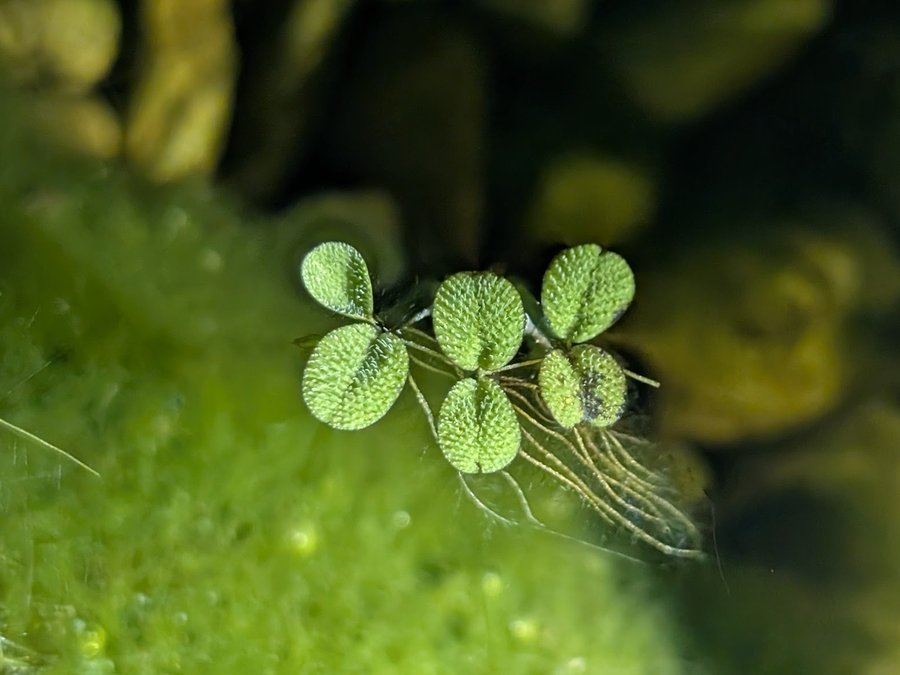
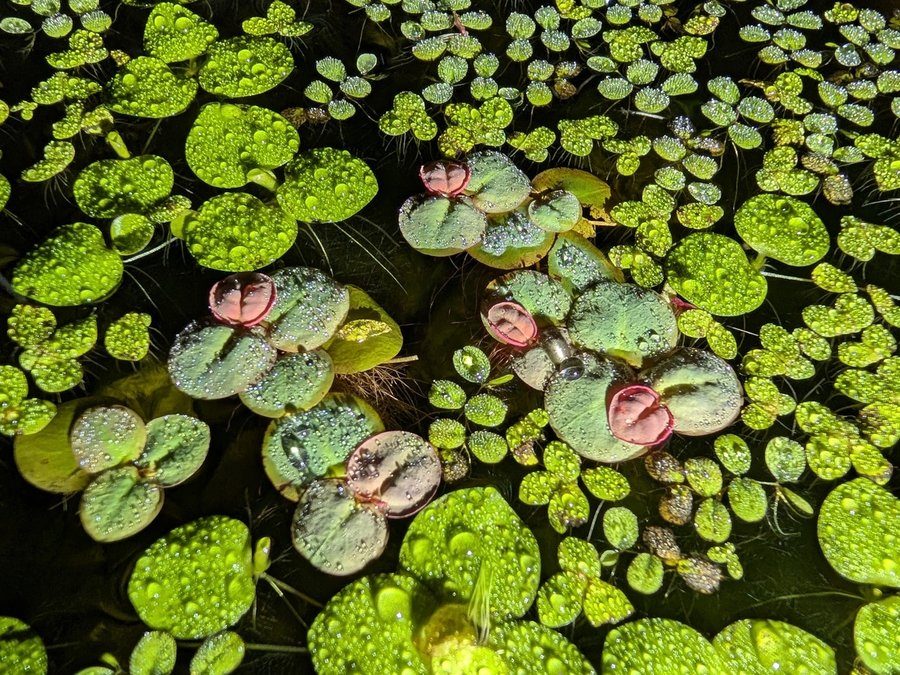
They sit on the surface, shading the water and pulling nutrients out of it. These are the ones that ship free with every fish or snail order.
Submerged plants
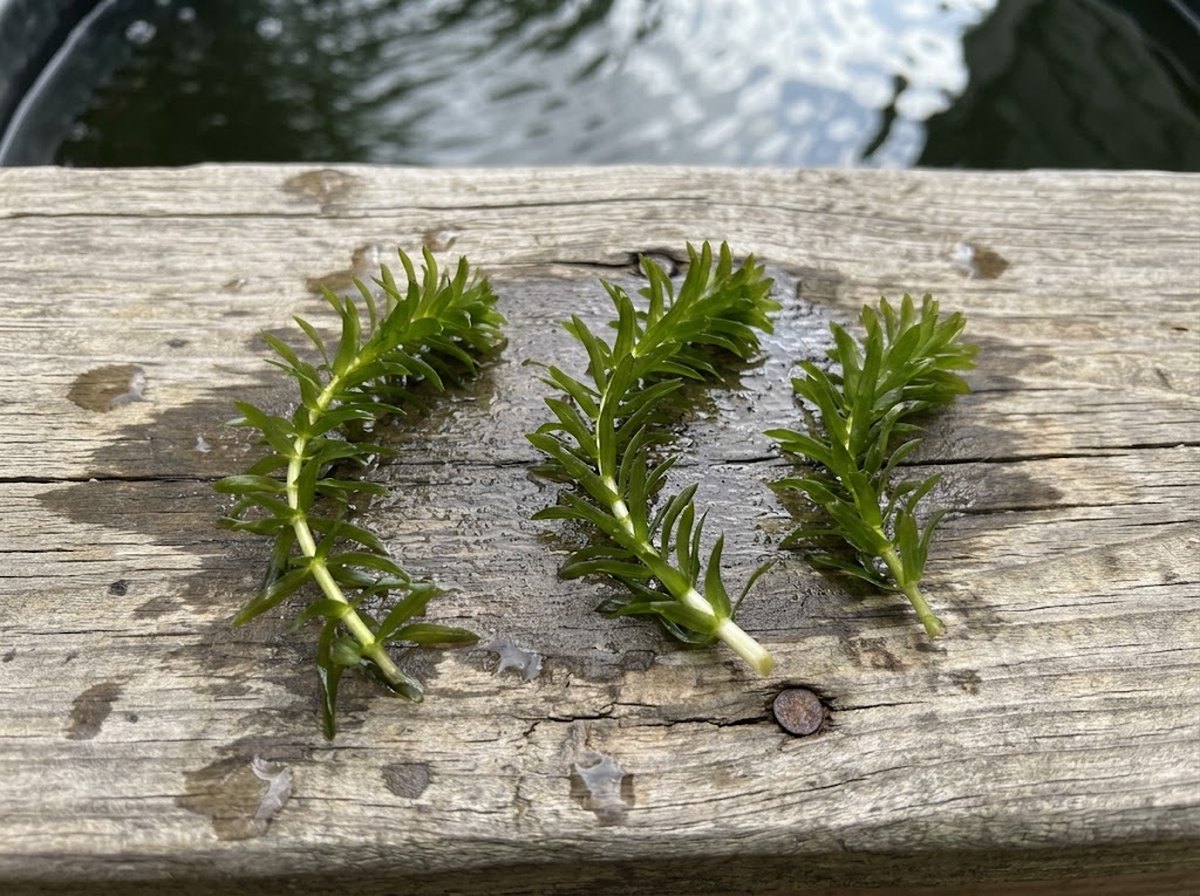
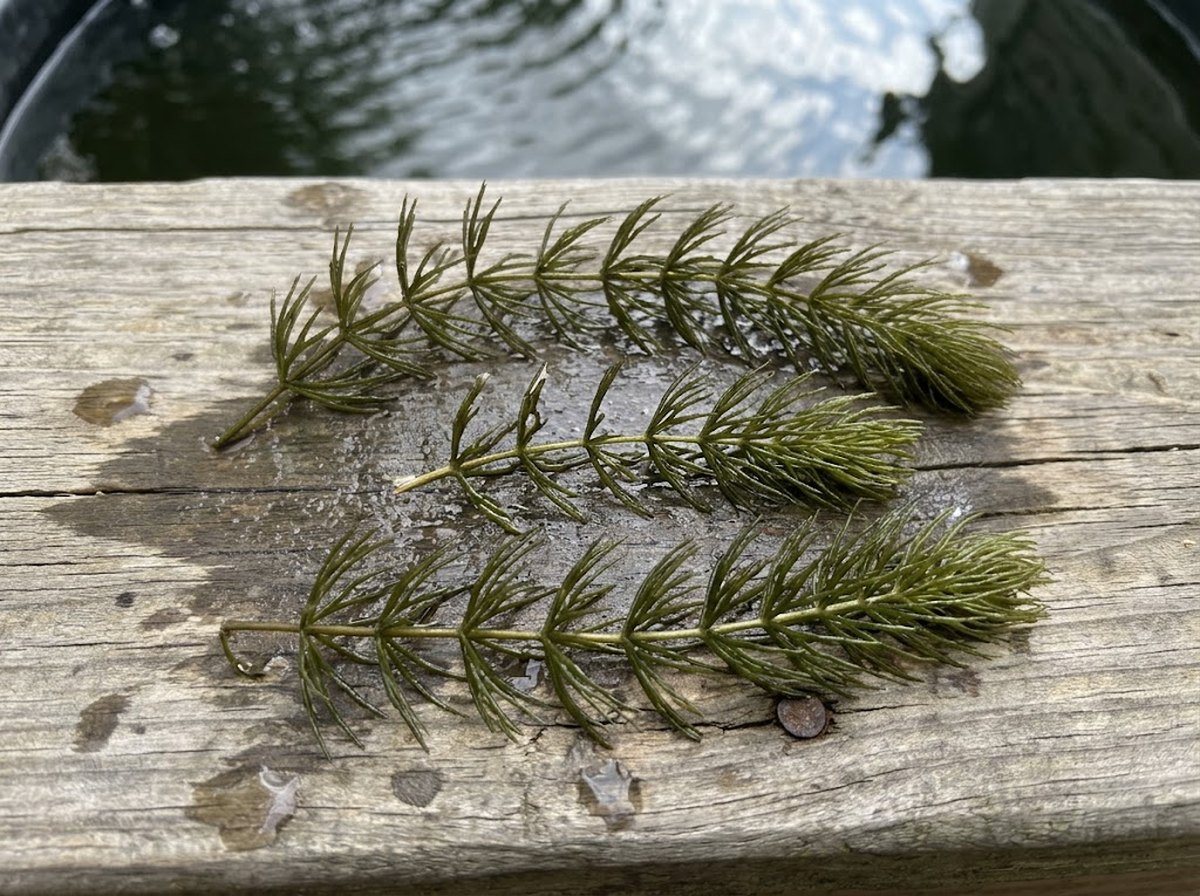
They grow in the water column rather than on it, giving fry somewhere to hide and competing with algae for nutrients. Both propagate by simply being pinched: break off a section and it becomes a new plant.
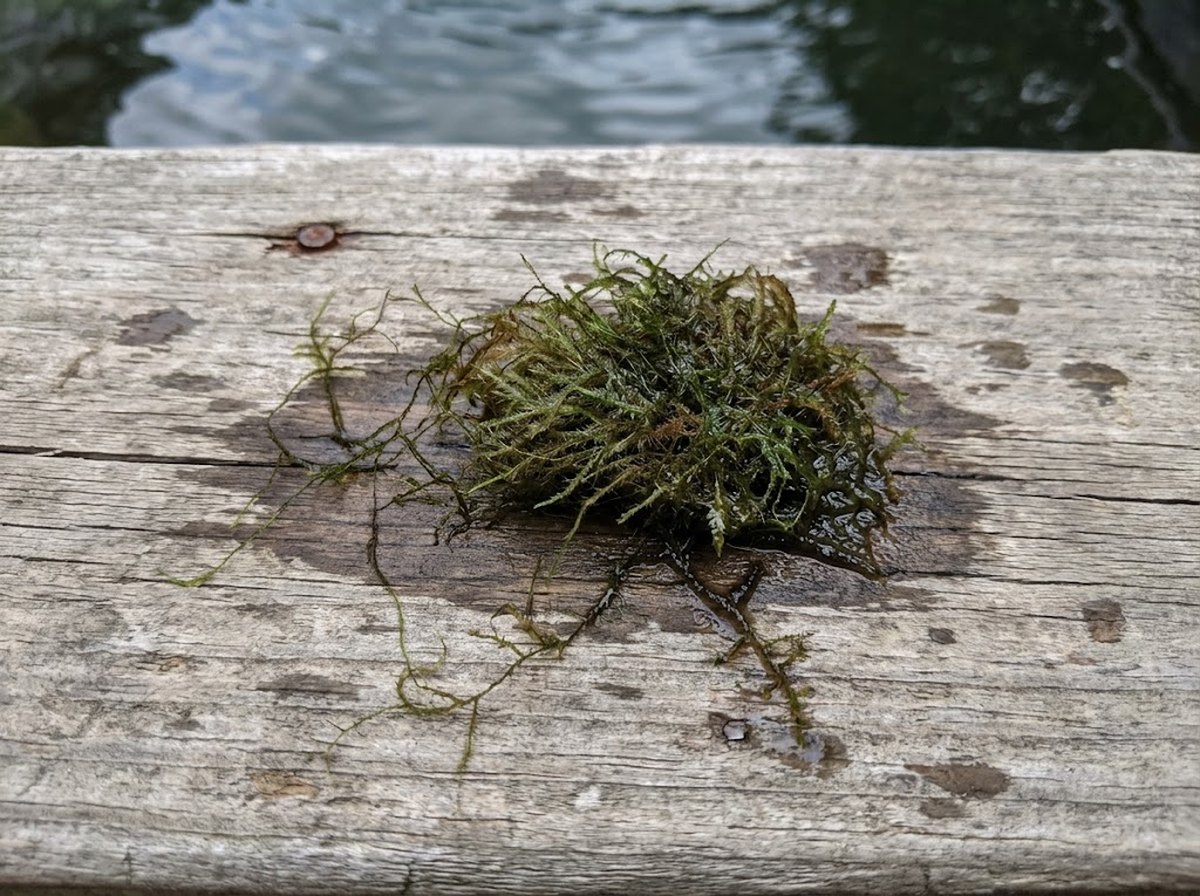
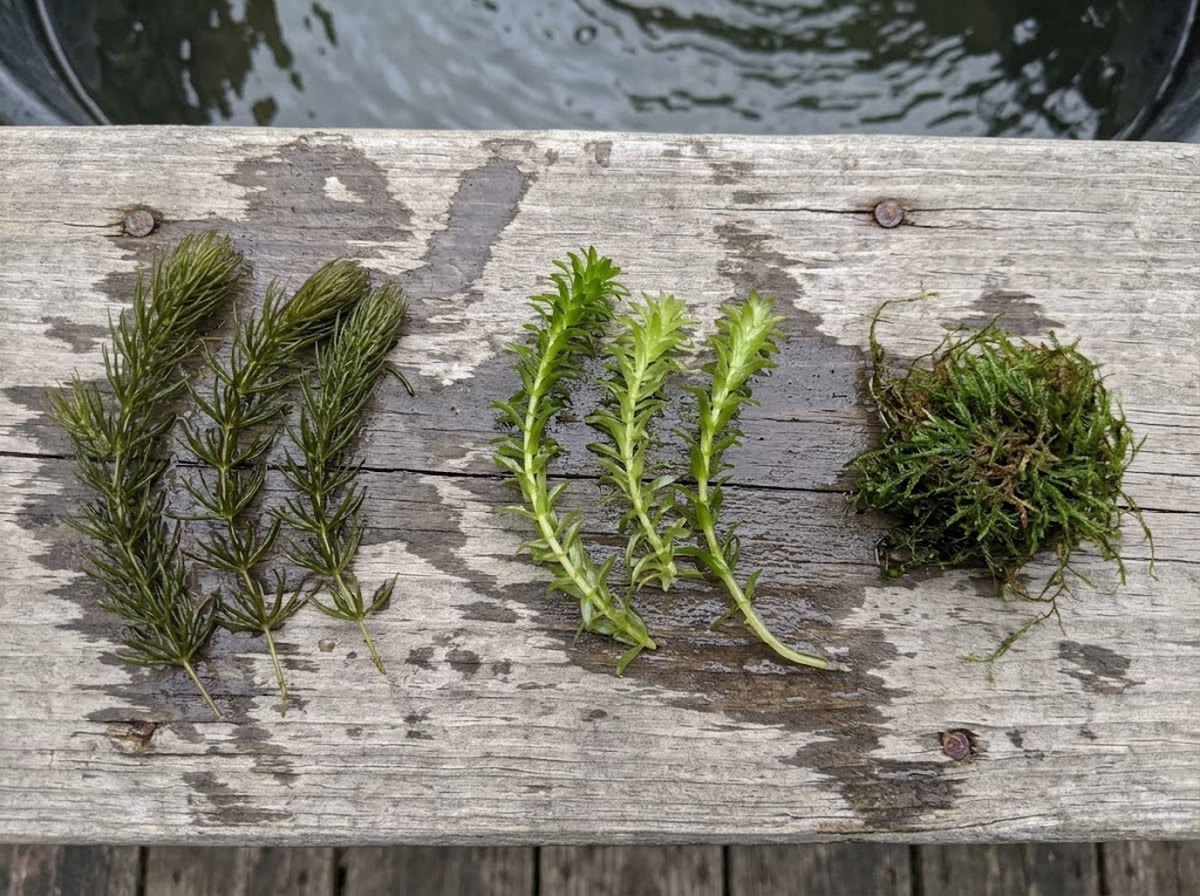
Live plants for medaka pots, tanks, and ponds
Live plants are the easiest way to make a medaka setup nearly run itself. Floaters sit on the surface, drink nitrate and ammonia straight out of the water, shade it to keep algae down, and hang trailing roots that fry and shrimp hide in. Submerged plants do the same work lower down, filling the water column with cover so fry have somewhere to disappear to. In a sunny tub both do all of this on their own, no CO2, no special lighting, no fuss.
The floaters I grow
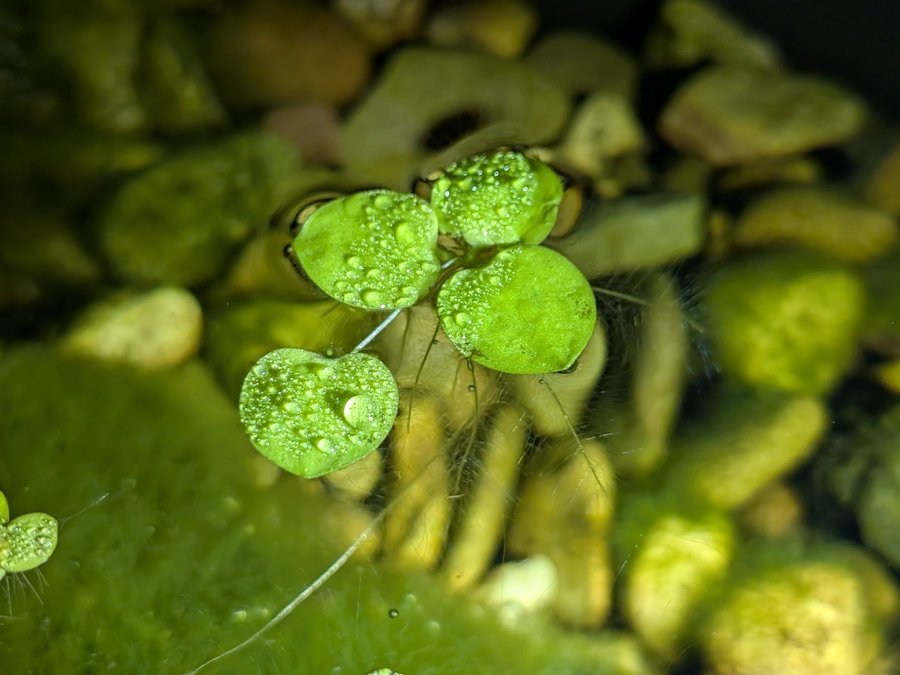
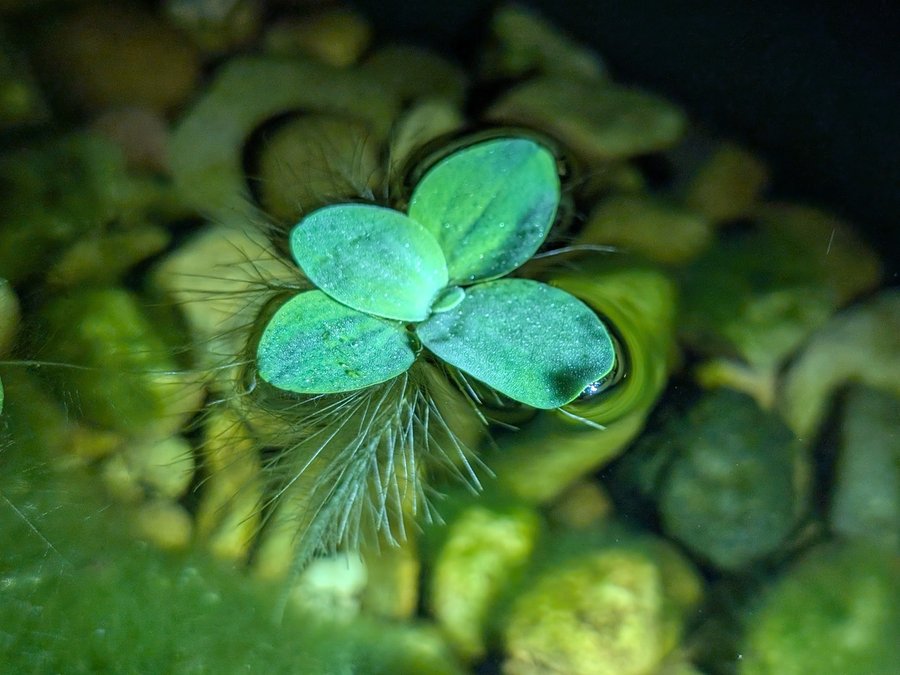
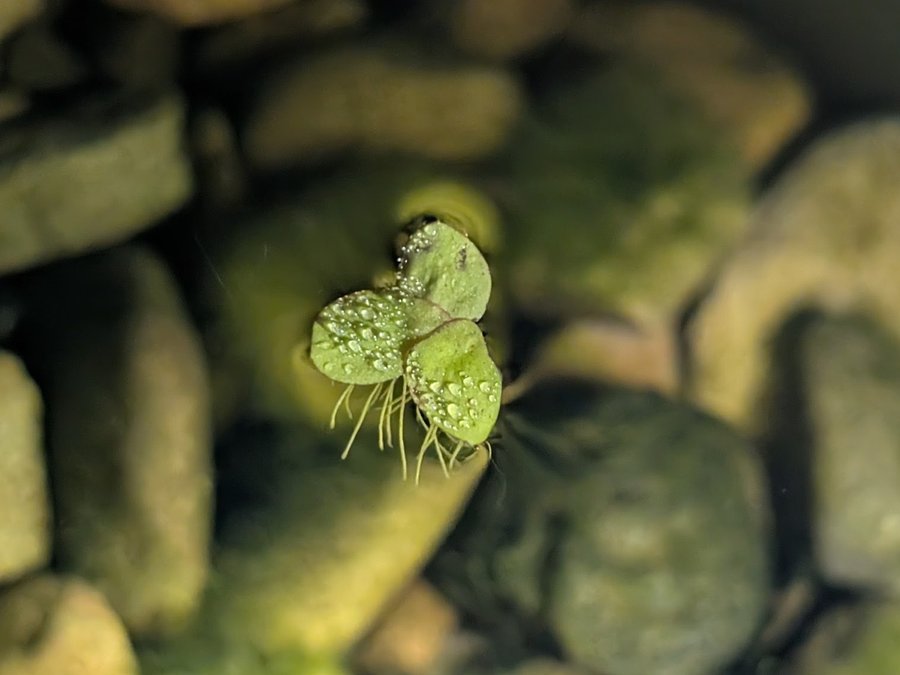
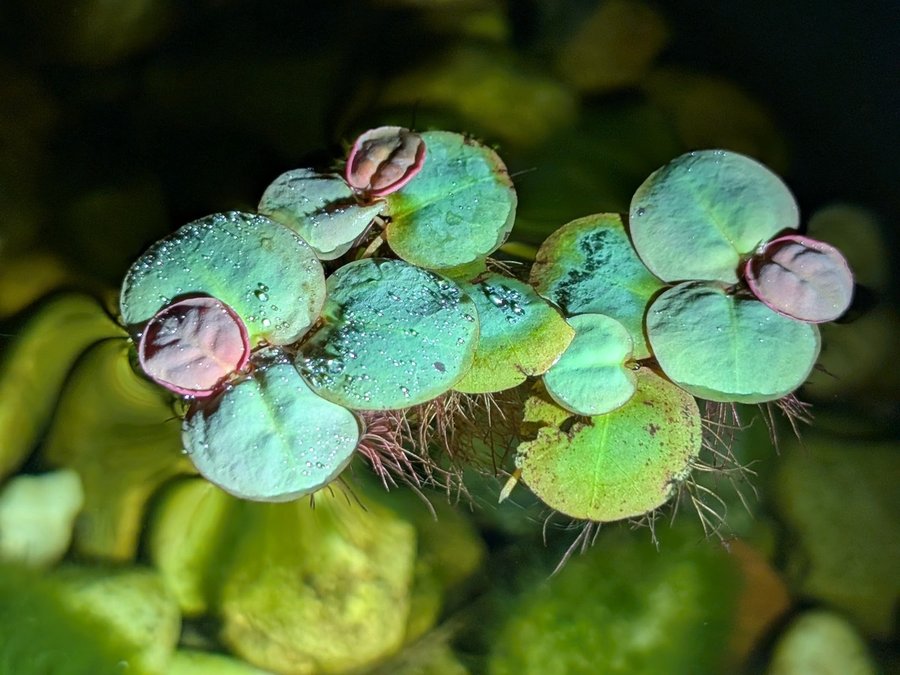
I offer Amazon Frogbit and Dwarf Water Lettuce for lily-pad canopies and long fry-cover roots, fast-spreading Salvinia for quick surface shade, and the colorful Red Root Floaters that blush red under good light, plus Giant Duckweed, a fast, effective nutrient sponge (and, despite the name, easier to manage than the tiny common duckweed people dread). Want a bit of everything? The variety pack bundles all five for less than buying them separately.
Which floating plant is right for you?
Every floater here shades the water, soaks up nitrate, and gives fry cover, but each has its own strengths. Here is a quick side-by-side to help you choose.
| Plant | Growth | Roots for fry & shrimp | Light | Best for | Ships to |
|---|---|---|---|---|---|
| Amazon FrogbitLimnobium laevigatum | Fast | Long, excellent | Low to medium | Shade and fry cover | Widely legal |
| Dwarf Water LettucePistia stratiotes | Fast | Long, excellent | Medium to high | Shade and nitrate control | Restricted in some states* |
| Giant DuckweedSpirodela polyrhiza | Fast | Short | Low to medium | Strong nutrient uptake | Rarely restricted |
| Red Root FloatersPhyllanthus fluitans | Moderate | Short | Medium to high | Red color, top-down displays | Widely legal |
| SalviniaSalvinia minima | Fast | Short | Medium | Dense surface shade mat | Restricted in some states* |
* Dwarf Water Lettuce and Salvinia are regulated as potential invasives in some states, so I cannot ship them everywhere. Each listing shows the current restricted-state list, and if one is not legal in your state I simply pack more of the floaters that are, at no extra cost. Not sure which to try? The variety pack is the easiest way to sample several at once.
Why add plants under the surface?
Floaters cover the surface. Anacharis, Hornwort, and Java Moss fill everything underneath it, which is where fry actually spend their time. All three grow in plain water with no substrate, no fertilizer, and no CO2. The two stem plants propagate about as easily as a plant can: pinch off a section, drop it back in, and it grows into a new plant. Java Moss simply spreads into a tangled mat, which is the best fry cover I know of. That is how I keep mine going season after season.
Hornwort has no true roots at all. It will float, sink, or wedge itself between rocks depending on where you put it, and it holds up well in cool water, which makes it a reasonable choice for an outdoor pot heading into fall. Anacharis grows in dense, upright stems and can be anchored in gravel or simply left loose. Both are among the classic beginner plants for a reason.
Which submerged plant is right for you?
All three work below the surface where fry actually live, and the variety pack bundles them at a discount. Here is how they differ.
| Plant | Growth | Placement | Cold tolerance | Best for | Ships to |
|---|---|---|---|---|---|
| HornwortCeratophyllum demersum | Fast | Floats free or anchors, no true roots | Excellent, keeps working in cold water | Year-round workhorse, fry shelter | Widely legal |
| AnacharisEgeria densa | Fast | Anchor in gravel or leave loose | Good, handles cool water well | Fast nutrient uptake, dense stems | Restricted in many states* |
| Java MossTaxiphyllum barbieri | Slow | Attaches to wood, rock, or mesh | Fair, best brought in from hard-freeze winters | Egg deposit and the best fry carpet | Widely legal |
* Anacharis is regulated in a number of states, listed below. The cart checks your state automatically and offers a legal swap if it can't ship to you.
Please read before ordering Anacharis. Anacharis (Egeria densa) is banned, restricted, or otherwise regulated in Alabama, Alaska, California, Connecticut, Hawaii, Idaho, Illinois, Indiana, Maine, Massachusetts, Michigan, Minnesota, New Hampshire, New York, North Dakota, Oregon, South Carolina, Vermont, Washington, and Wisconsin. I do not ship it to those states. Rules change, so if you are anywhere near a restriction, check your own state before ordering. And whatever you keep, never release a plant or its trimmings into a natural waterway. Bag what you trim and put it in the trash.
Free with every fish or snail order, or add more here
Every fish or snail order already ships with a free assortment of floating plants, so you're never starting bare. That freebie is my pick, though, a random mix based on what is thriving and what is legal to ship to your state, so you might not get a specific plant you are after. Buying from these listings is how you get more of them and choose exactly which plants you want, or green up a tub before your fish arrive. Kept in decent light they multiply fast, so a small starter portion soon covers the surface. Floaters are enthusiastic. Scoop out a handful every week or two, keep at least a third of the surface open, and they stay a help instead of a takeover.
How they ship
Plants ship in the same padded boxes as my livestock, on my normal Monday schedule, at the usual flat-rate shipping. Add them to a fish, snail, or supplies order, or buy them on their own. New to keeping medaka? My floating plant care guide, my medaka care guide, and outdoor pond guide all cover how live plants keep the water healthy.
Floating plant questions
Quick answers for first-time plant buyers, from the pots I grow them in.